

The GPSW Welcomes the Class of 2027
As one class is starting their summer internships, another is getting ready to head to Cambridge. We are thrilled to announce our Class of 2027! Our incoming students bring a wide range of experience and expertise. We’re delighted to welcome:
Amber X. Chen is a writer and journalist from LA’s San Gabriel Valley. She recently graduated from the University of California, Berkeley, where she reported for and edited The Daily Californian. Her writing on the environment, health, and politics has appeared in The Guardian, The Nation, Smithsonian, Inside Climate News, Teen Vogue, Atmos, and more. Her writing on the arts, music, and culture has appeared in No Bells, The Philadelphia Inquirer, and the Asian American Arts Alliance.
Alissa Fagin is a New York-based science communicator and documentary filmmaker whose projects have spanned topics including octopuses, maternal mortality, and synesthesia. Her work has been screened at Sundance and Tribeca, and can be found on Netflix, Prime Video, HBO, Hulu, and Vice. Most recently, Alissa directed Sound & Color, a documentary short that is being screened at festivals and conferences globally.
Cameron Glymph is a recent graduate of Florida State University, where she earned degrees in English and Political Science. During her time at FSU, she served as editor-in-chief of the FSView & Florida Flambeau, the university’s student-run newspaper, leading its transition from a weekly print publication to a digital-first, daily news platform. Beyond her work with the FSView, Glymph was a member of the third cohort of The New York Times Corps. She reported on the social impacts of climate change and environmental policy for the Florida Student News Watch and Planet Forward, with a focus on how these issues affect communities.
Sruthi Gurudev is a science journalist who’s interested in the environment, wildlife, marine science, and natural history. She has covered stories ranging from whale falls and hatching squid to snake zoonotics and disappearing ecosystems. Her work has appeared in National Geographic, The New York Times, and Mongabay. Sruthi also explores scientific dimensions in archaeology, prehistory, and vanishing cultural traditions. Sruthi is a National Geographic Explorer, a 2025 Uproot Fellow, and a 2026 Taylor/Blakeslee Fellow.
Amisha Kumar is a data journalist whose reporting mines lived experiences, unconventional sources, and underrepresented perspectives to explore issues ranging from food insecurity to zookeeping. Amisha’s reporting interests span health and the environment, including their intersection, chronic illness, and cognition; climate resilience and eco-cultural restoration; and how technology and policy impact these areas. As a journalism student at Boston University, Amisha reported for ProPublica, The Baltimore Banner, and the Cape Cod Times, among others.
Jenna Lang is a science communicator who grew up in Boston and studied psychology at Harvard. While working in public health research, she discovered the field of science communication. Now, she feels lucky to learn more about the world every day. For the past five years, Jenna worked at an exhibit media company, writing for museums, science centers, and historic sites.
Jesse Steinmetz is a reporter and public radio producer based in Massachusetts. He got his start in journalism as an intern at CT Public in Hartford, before working as a producer for the NPR affiliates WFAE in Charlotte and GBH in Boston. In recent years, his stories have covered everything from seaweed farmers to a minimalist smartphone company and the big business of online scammers. He has written for Forbes, Live Science, Inc. Magazine, Duolingo, and CommonWealth Beacon, among other outlets. In 2025, he was awarded a fellowship from the National Press Foundation.
Avery Truman is a journalist with undergraduate degrees in environmental studies and geography from Utah State University. She has completed two NASA writing internships, served as the managing editor of The Utah Statesman, and worked as an intern at the National Geographic Society.
Longer bios of our incoming students are available here. We can’t wait to welcome these sharp young writers to Cambridge this fall.

Jessica Chomik-Morales, ’25, Wins a Fulbright Grant
Congratulations to Jessica Chomik-Morales for winning a Fulbright grant. Jessica was one of ten MIT affiliates, including undergraduates, graduate students, and alumni, to receive the award. Fulbright grants are funded by the US Department of State and offer opportunities for students and recent alumni to pursue graduate education, research, or teach English in 140 countries.
Jessica will use her award to head Universitat Pompeu Fabra’s Center for Brain and Cognition in Barcelona, where she will research the underlying science that makes science communication effective or not. Specifically, Jessica will study the ways in which narrative elements in science communication shape how readers understand and engage with the material.
Jessica was in the science communication field long before coming to the MIT Graduate Program in Science Writing. She is the creator, host, and producer of “Mi Última Neurona,” a Spanish-language podcast that focuses on neuroscience, and is currently producing the “Lab Notes on Love” audio series for Scientific American.
Congratulations, Jessica! You can read about all of MIT’s Fulbright winners here.

Alex Ip, ’24, Wins an Honorable Mention from the Asian American Journalists Association
Congratulations to Alex Ip, ’24, for winning an honorable mention in the Asian American Journalists Association Journalism Excellence Awards. Alex scooped up the accolade in the Excellence in International Reporting category alongside Rhysea Agrawal for “A Tale of Three Sudans,” a three-part series published on The Xylom that covers climate change, flooding, and food insecurity crises faced by East Africans.
The series required extensive international reporting and hefty contributions by Xylom Editor-at-Large Kang-Chun Cheng, and journalists Median Hassouna and Rahiem Shadad.
The honorable mention is one of many awards The Xylom has collected over the past few years. It is the only Asian American-run health and climate news outlet, and specializes in multilingual reporting from across the globe. In recent years, Alex, the publication’s founder, publisher, and editor, has won the Atlanta Press Club’s 2024 Rising Star Award and has been a finalist for the Emerging Leader of the Year Award from the Institute for Nonprofit News, the Good Trouble Honors from the Center for Civic Innovation, and the Transparency Award, which is given to individuals or organizations that make information understandable and accessible to local communities.
You can read all three stories from the Xylom series here:
“Can The Ilemi Triangle’s Forgotten Pastoralists Trade Arms for Peace?”
“Fragile, Flooded South Sudan Asks: What About Those With Disabilities?”
“River Nile Blues: Famished Sudanese Turn to the Humble Sweet Potato”
The full list of Journalism Excellence Award recipients is available here.
Congratulations, Alex!
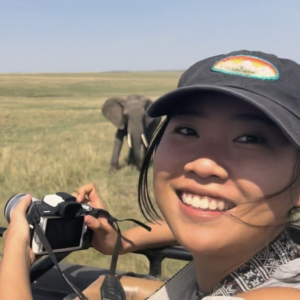
Nanticha (Lyn) Ocharoenchai, ’25, Named a Logan Science Journalism Fellow
Nanticha (Lyn) Ocharoenchai, ’25, will add to her environmental reporting credentials this summer as a Logan Science Journalism Fellow. Lyn will travel to the Marine Biological Laboratory in Woods Hole, Massachusetts, to attend a ten-day intensive program designed to immerse science journalists, writers, and editors in environmental research. This year’s environmental program will focus on how nitrogen impacts coastal ecosystems, and will offer fellows access to scientists working in the field as well as opportunities to take samples in the field, make laboratory measurements, and work with researchers to analyze data.
Only six environmental fellows were selected this year. In addition to the environmental program, the Logan Science Journalism Fellowship also offers a biomedical research program. You can read about all of the fellows here. Congratulations Lyn!

Courtney Humphries, ’04, Illuminates Boston’s Climate Future
As the effects of climate change ravage cities across the world, Boston faces impending sea level rise, flooding, and dangerous levels of heat. Courtney Humphries, ’04, chronicles these potential futures and solutions in her new book, Climate Change and the Future of Boston (Anthem Press).
The book takes readers through the history of Boston and its current position as a leader on climate adaptation and mitigation, and addresses systemic challenges that hinder broader climate action, including aging infrastructure, historic racial inequities, rising gentrification, income inequality, and regulatory barriers.
“Courtney Humphries’ excellent new book offers a detailed exploration of the intricacies policy makers face when confronting climate change,” Janelle Knox-Hayes, director of Resilient Communities Lab at MIT, said in a review. “The Boston case study is richly detailed and seamlessly blends governance theory with empirical insight. Climate policy is unpacked through complex cultural, socioeconomic, and environmental dynamics. Humphries’ use of historical data and detailed analysis of the current policy evolution reveals the promise and limits of urban climate leadership. This book is essential reading for scholars and practitioners alike who wish to be more effective in building climate policy on the ground.”
In addition to holding a masters in science writing from MIT, Courtney also holds a Ph.D. in environmental science from the University of Massachusetts Boston. She’s currently a lecturer at Smith College and her bylines can be found in The Boston Globe, Nature, Science, Technology Review, Harvard Magazine, Nautilus, and The Atlantic, among others.
Climate Change and the Future of Boston is available here.

Maria Parazo Rose, ’22, Launches New Global Indigenous Land Reporting Project
After completing her Nova Media Fellowship, Maria Parazo Rose has a new project supported by The Nova Institute for Health. Supported by a grant to Nova from the Robert Wood Johnson Foundation, Maria will assemble a team of Indigenous land practitioners and experts from across the globe and investigate cases where nations ranging from Canada to South Africa have returned land to Indigenous peoples. The goal of the project is to both illuminate the long-lasting ripple effects of land return cases and to pinpoint best practices and successful strategies for conducting these procedures.
“Improving health issues in Indigenous communities is tied to land: its history, its use, and its future. Centuries of land dispossession and the systematic denial of basic rights have created poorer economic, social, and health conditions for Indigenous peoples,” Maria said in a press release. “Secure land tenure drives Indigenous resilience, and planetary health as a result, making it critical to understand what effective land return initiatives look like worldwide.”
The project is an expansion of Maria’s Nova Media Fellowship project, which examined how land rights and climate change impact tribal communities, sovereignty, and jurisdiction. Maria published a series of stories on these issues in Grist, where she was formerly a reporter and spatial data analyst on the Indigenous Affairs desk.
Congratulations, Maria!

Rachel Becker, ’15, and Lisa Song, ’09, Win Society of Environmental Journalists Awards
Congratulations to Rachel Becker, ’15, and Lisa Song, ’09, for winning Society of Environmental Journalists (SEJ) Awards for Reporting on the Environment.
Rachel won a second place prize in the Outstanding Beat Reporting, Small Publications category for a series of stories she reported for CalMatters that cover the immense complexities of California’s water crisis.
Judges called the series “thoughtful, clear and meaningful reporting on one of California’s most important issues,” adding that the “stories hold power to account and provide transparency to the way policies and regulations are implemented.” They also complimented the use of data, graphics, and photography by data journalists Arfa Momin, John Osborn D’Agostino, Natasha Uzcátegui-Liggett, and photographers Loren Elliott , John Gastaldo, Miguel Gutierrez Jr., Martin do Nascimento and Larry Valenzuela.
This isn’t Rachel’s first SEJ award. In 2021, she won first place in the Outstanding Beat Reporting category for stories on water contamination from wildfires and industrial pollutants. She has also scooped up accolades from the California News Publishers Association, the Northern California Society of Professional Journalists, and the San Francisco Press Club, as well as a Golden State Journalism Award in the Environmental Reporting category and a Rita Schmidt Sudman Award for Excellence in Water Journalism.
Lisa Song won an honorable mention in the Outstanding Explanatory Reporting, Large Publications category for a ProPublica series that dives into the realities and broken promises of plastic recycling.
“Lisa Song’s investigation is powerful and deeply consequential,” judges noted. “A terrific combination of an overview that explains the pyrolysis issue, a discussion of the impact for consumers and tracking of the policy movement on the issue. When the California attorney general’s office sued ExxonMobil for deceptive practices, this story was cited. That’s journalism that makes an impact.”
An investigative environmental reporter at ProPublica, Lisa has won a long list of environmental reporting awards, including the Pulitzer Prize, the Philip Meyer Journalism Award for Social Science, and several awards from the Society of Environmental Journalists.
Congratulations, Rachel and Lisa. You can read Rachel’s entire CalMatters series here:
“These 42 California dams need repairs. But lawmakers cut the funds in half”
“Californians to face steep fines for violating water orders under new legislation“
“‘I won’t let them drink the water’: The California towns where clean drinking water is out of reach“
“A new invader threatens California water supplies. Can the state stop its spread?“
And Lisa’s ProPublica series here, which includes with support from Alex Bandoni (visuals), Anna Donlan (story designer), Max Gunther (illustrator), and Lucas Waldron (graphics):
“Biden EPA Rejects Plastics Industry’s Fuzzy Math That Misleads Customers About Recycled Content“
“The Plastics Industry’s Wish List for a Second Trump Administration“

MIT Science Writing Students Collaborate With The Associated Press

AP-MIT Climate Storytelling Workshop (AP Photo/Joshua A. Bickel)
Last March, six reporters from the Associated Press’s climate desk traveled from cities across the US to work with students from the MIT Graduate Program in Science Writing. Students developed and pitched local climate stories, then over a four-day intensive weekend, worked with visual journalists from the AP to report and produce their pieces. Articles cover a broad spectrum of environmental topics, ranging from area kelp harvests that are used to produce biofuels to efforts to restore cranberry bogs in environmentally friendly ways, and include visual elements, like photography and videography. Stories will be published on the AP’s website each week starting today.
“This workshop was an intense few days that offered a unique opportunity for MIT journalists to get feedback while in the field reporting. The students brought enthusiasm and passion to the reporting, heading out before the sun came up and working long into the nights over the weekend for stories in the Boston area and beyond,” said Associated Press’ Climate Photo Editor Alyssa Goodman, the workshop’s lead organizer. “For the AP team members who participated, it was also a rewarding opportunity, allowing us to share our passion for climate storytelling while getting to know these students, watching them build strong stories and gain experiences that will help them as they continue in journalism.”
The collaboration is unique, even among journalism programs. The Associated Press is one of the most prestigious, longest-running news wire services in existence. Nearly four billion people worldwide come in contact with AP journalism every day. The publication has won 59 Pulitzer Prizes, including 36 in photojournalism.
MIT student reporters say that the opportunity to directly work with journalists from the AP’s climate team and have their own stories published has been a highlight of their time in the Graduate Program in Science Writing.
“It was great to be in the field with a reporter and photographer from the AP News team, learning directly from her as the reporting unfolded,” said Zoe Beketova, GPSW ’26, whose story focused on kelp biofuels. “That kind of expertise is difficult to get in a static classroom setting, and I think my team learned a lot.”
Ana Georgescu, GPSW ’26, said that the experience of working with the AP team was “like stepping into a real newsroom.” Georgescu added that coordinating with AP editors and reporting teams in real time and under tight deadlines provided valuable on-the-ground experience.
“What made the biggest difference for me was being in the field alongside an experienced photojournalist and seeing how they read a scene in practice,” she said. “We were able to get immediate feedback on how we directed subjects, which scenes we chose, and how we integrated photography into the reporting process. That kind of hands-on, in-the-moment experience was incredibly helpful, and it’s made me really excited to keep exploring climate stories as well as the visual side of journalism.”
You can read the first story from the AP-MIT collaboration here: “How a retired cranberry bog helped change the game for wetland restoration” by Jamie Jiang and Julia Vaz, ’26, with editing and mentoring support from Stephanie Scarbrough and Jonathan Drew. The story has been syndicated to The Houston Chronicle, The Independent, The Seattle Times, The Toronto Star, The Washington Post, and many more outlets. We will update this story as additional articles are published.
UPDATE:
The second story from the AP-MIT collaboration has been published: “Massachusetts is dumping sewage into waterways. Grassroots organizations are fighting back” by Ashley D’Souza and Lucie McCormick. Graphic by M.K. Wildeman and editing and mentoring by Jonathan Drew and Alyssa Goodman.
The third story from the AP-MIT collaboration has been published: “One of America’s oldest weather observatories shows people the science behind our climate” by Laura Martín Agudelo and Alex Megerle. Editing and mentoring by Peter Prengaman, Joshua Bickel, and Alyssa Goodman.
The fourth from the AP-MIT collaboration has been published: “Planes and ships could run on kelp someday, but there are serious hurdles” by Zoe Beketova and Ana Georgescu. Editing and mentoring by Annika Hammerschlag, Peter Prengaman, and Alyssa Goodman.

Join us for the thesis presentations of the Class of 2026! Be intrigued, educated and sometimes called to action. May 15, 2026
Presentations will begin at 10am on Zoom: https://mit.zoom.us/j/95936903596
Featured presentations from:

Science News is proud to name Celina Zhao as the inaugural winner of the $1,000 Starks-Murcutt Prize for Excellence in Science Journalism. The award honors an early-career Science News intern or fellow whose work adheres to strict standards of accuracy, fairness and understanding of the scientific method, while also making science accessible to the public through clear and engaging writing. Zhao, who holds a bachelor’s degree and a master’s degree from MIT, was honored for her story, How much energy does your AI prompt use? It depends.
“I’m thrilled that we are able to honor Celina Zhao as the first recipient of the Starks-Murcutt Prize for Excellence in Science Journalism,” said Nancy Shute, editor in chief of Science News Media Group. “She met and exceeded our high standards, and I know she will excel in her career as a science journalist.”

In Her New Book, Cara Giaimo Offers Assurance, Affirmation, and Hard Truths From Aquatic Advisors
Is living on land dragging you down? Why not seek out advice from the depths below? In her newest book, Leaving the Ocean Was a Mistake, Cara Giaimo, ’15, offers advice and humorous life lessons from 60 real-life sea creatures, along with fun and quirky facts about their world.
Nuggets of wisdom include “it’s good to get it all out,” recommended by the fire-breathing shrimp who vomits bioluminescent goo when threatened, and “if you love someone, absorb them into your bloodstream,” from the fanfin anglerfish, who expresses love by fusing with its mate.
“Giaimo does a wonderful job engaging readers’ sense of wonder by introducing them to animals that they may have never encountered before, while also dispensing nuggets of advice to bring smiles to their faces,” Laura Nan Hargrove wrote about the book in the trade magazine, Library Journal. “…Ocean lovers and those in search of lighthearted self-help will enjoy this unusual advice book.”
Cara Giaimo is also the author of Atlas Obscura: Wild Life (2024) and coauthor of Detector Dogs, Dynamite Dolphins, and More Animals with Super Sensory Powers (2022) with Christina Couch, ’15.
You can get your copy of Leaving the Ocean Was a Mistake at Bookshop.org and wherever books are sold.
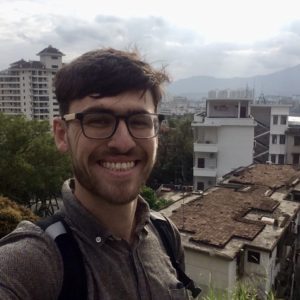
James Dinneen, ’22, Wins a 2025 NASW Science in Society Journalism Award
Congratulations to James Dinneen, ’22, for winning a 2025 NASW Science in Society Journalism Award. James landed the prize in the Science Reporting category for his story, “Drought Has Hit the Panama Canal Hard – Can It Survive Climate Change?” Published last February in New Scientist Magazine, the piece chronicled how one of the world’s most important shipping routes is affected by and coping with fluctuations in water supply.
“A difficulty of covering climate change is illustrating this catastrophic phenomenon that is invisible to the human eye,” the judges said. Dinner “overcomes this barrier by focusing on climate change’s impacts. The story braids together the visible impacts of long-term drought on the Panama Canal with the climate science that undergirds the drought, and the economic and social consequences if we allow climate change to continue unchecked.”
James is an environment reporter at New Scientist and has bylines in Quanta Magazine, National Geographic, Undark Magazine, The Boston Globe, bioGraphic, Science, and many more publications. He was a finalist for a 2022 National Magazine Award and won the American Society of Journalists and Authors award for investigative journalism.
Congratulations, James! You can read about all of the Science in Society award winners here.